
Category
Basics & Diagnosis
What Crohn's disease and ulcerative colitis are, how they are diagnosed, and how to read lab, colonoscopy and biopsy results.

Biopsy/Pathology Terms in UC: “Chronic Active Colitis,” Crypt Abscesses, Dysplasia
Chronic active colitis meaning: decode UC biopsy terms like crypt abscesses and dysplasia, plus when cancer surveillance starts and how often.

Calprotectin Fluctuations: What Is Normal When You Compare Results
Normal calprotectin fluctuations can vary 8% to 26% between samples. Learn how to compare trends, account for medications, and know when to retest.

Calprotectin vs CRP for UC: Which One Reflects Colon Inflammation Better?
Calprotectin vs CRP in ulcerative colitis: compare stool and blood markers, learn which better reflects colon inflammation, and why results differ.

Capsule Endoscopy for Crohn’s: When It Helps — and When It’s Risky
Capsule endoscopy for Crohn’s can reveal small-bowel inflammation. Learn when it helps, retention risks of 2.4% to 4.6%, and key safety checks.

Clinical Remission vs Biochemical Remission in IBD
Clinical vs biochemical remission in IBD: learn how symptoms, CRP and fecal calprotectin differ, key cutoffs, and why labs matter when you feel well.

Clinical Trial Results: Why IBD Answers Take So Long
Understand the steps between your last visit and public IBD trial results.

Clinical Trials for IBD: What Participation Actually Involves
See what IBD trial participation may require from first call to follow-up.

Colonoscopy Prep With Crohn's: Tips That Actually Help
Colonoscopy prep with Crohn's: get low-volume, split-dose guidance, a 5-7 day low-fiber plan, and key safety tips for strictures.

Colonoscopy Prep With UC: Tips That Actually Help
Colonoscopy prep with UC can be easier. Learn about split-dose, low-volume options, skin protection, symptom planning, and what to ask your GI.

Crohn's CDAI Score: Why Hematocrit and Symptoms Both Count
See what goes into CDAI and why the score cannot prove bowel healing.

Crohn's CDEIS Score: What It Measures on Colonoscopy
Understand the lesions behind a CDEIS result and what the score leaves out.

Crohn’s Colitis vs Ulcerative Colitis: How Doctors Tell Them Apart
Crohn’s colitis vs ulcerative colitis: compare continuous inflammation, skip lesions, biopsy findings and imaging, and learn why diagnoses may change.

Crohn's Harvey-Bradshaw Index: What Your HBI Means
Learn what an HBI measures, which labs it leaves out, and how to use it.

Crohn's Lemann Index: What Cumulative Bowel Damage Means
Understand why Crohn's damage and today's inflammatory activity are different.

Crohn's Lewis Score and CECDAI: Capsule Results Explained
Decode Lewis and CECDAI capsule scores without mistaking them for a diagnosis.

Crohn's MaRIA Score: What an MRE Activity Score Means
Learn what bowel-wall features drive MaRIA and where labs fit beside it.

Crohn's Montreal Classification: A, L, B, and p Explained
Decode your Crohn's Montreal code without mistaking it for a flare score.

Crohn's PRO-2 Score: The Symptoms Behind the Number
See how pain and stool frequency become a Crohn's PRO-2 result.
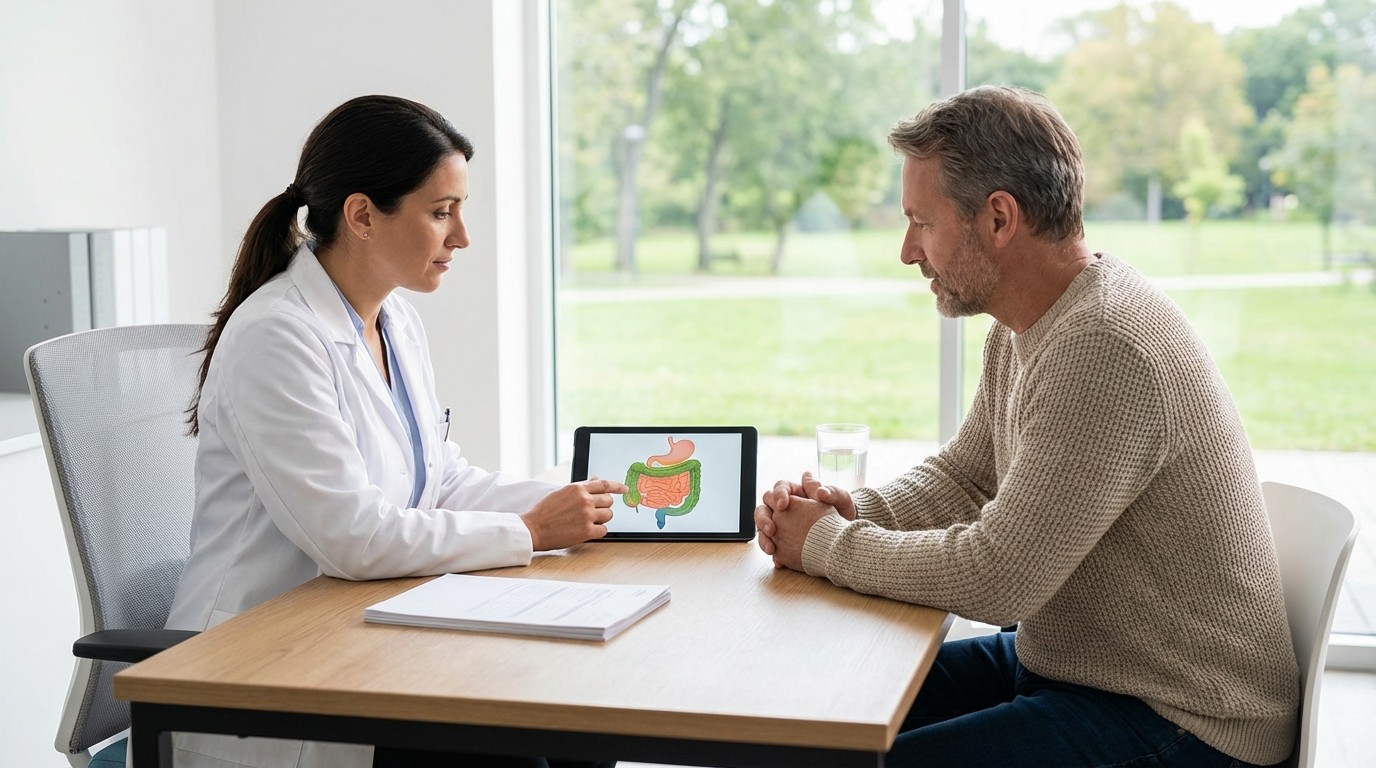
Crohn’s vs IBS: Symptoms, Key Differences, and the Tests GIs Use
Crohn’s vs IBS: compare symptoms and alarm signs, then learn how GIs use fecal calprotectin, CRP, colonoscopy, CT and MRI to distinguish them.

Crohn's vs UC vs IBS vs Celiac: How to Tell the Difference
Crohn's vs UC vs IBS vs celiac: compare symptoms, inflammation patterns and key tests like calprotectin, colonoscopy and tTG-IgA before your GI visit.

Early Signs of Crohn's Disease: What to Watch For
Early signs of Crohn's disease include recurring GI issues, joint pain, mouth ulcers and perianal symptoms. Learn when to seek a referral and testing.

Early Signs of Ulcerative Colitis: What to Watch For
Early signs of ulcerative colitis can include bloody diarrhea, mucus, urgency and cramps. Learn what mild or severe symptoms mean and when to see a GI.

Fecal Calprotectin: Normal Range + What High Levels Can Mean for Crohn’s
Fecal calprotectin normal ranges explained: compare <50, 50-120 and >120 µg/g, learn what high levels may mean for Crohn’s and when to retest.

Fecal Calprotectin: Normal Range + What High Levels Can Mean for UC
Fecal calprotectin normal range varies by lab. Compare common UC cutoffs of <50, 50-120 and >120 µg/g, and learn what high results can mean.